|
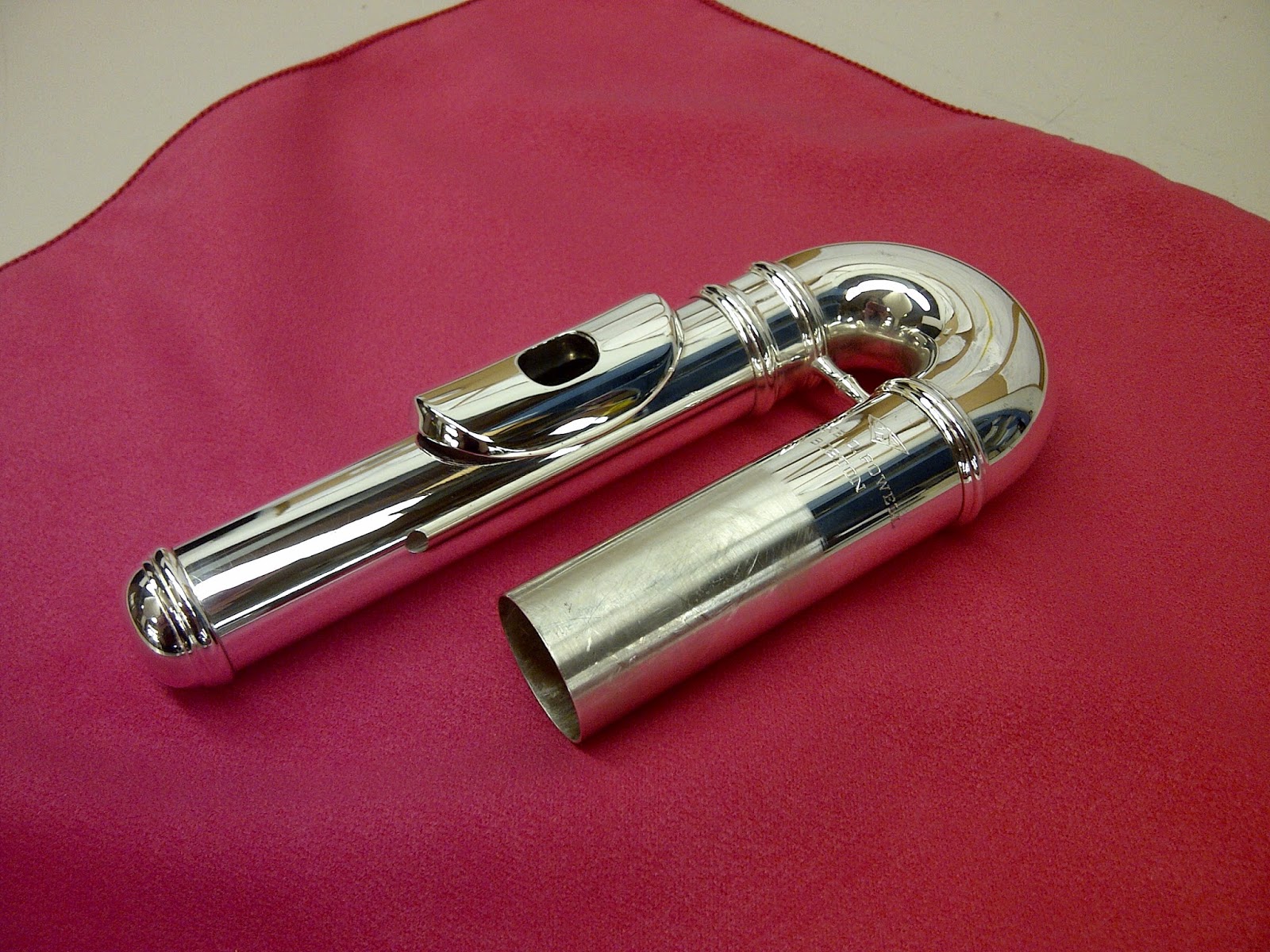
| Powell Sonaré 601 (with silver-plated nickel silver keys). |
By Steven A. Wasser
President, Verne Q. Powell Flutes, Inc.
Do you
know the silver content of nickel silver?
If you guessed anything more than 0%, you are misinformed. Although the name is clearly intended to make
you believe that this is some kind of silver alloy, the fact is that nickel
silver is comprised primarily of copper and nickel.
Here is
how this apparently came about. An alloy
of copper and nickel was developed in China, perhaps in the mid sixteenth
century. It was called paktong. Europeans wished to copy this alloy, which
had the appearance of silver, and finally succeeded in the late 18th
and early 19th centuries. Since
the European metallurgy was developed in Germany, this silvery-looking alloy
was called German silver. Subsequently,
because of its silvery look, it also became known as nickel silver.
Musical
instruments can generally be made of nickel silver in 2 situations: where the
nickel silver substitutes for sterling silver because it is cheaper, or where
it substitutes for brass because nickel silver is harder. Thus, you will find nickel silver flutes,
saxophones, and French horns. Because nickel silver is relatively easy to shape
and solder, you will also find instrument keys made of nickel silver, such as
for clarinets, flutes, and saxophones.
Even
though nickel silver might initially look like silver, it tarnishes
easily. In addition, many people have
allergies to nickel, so nickel silver used for musical instruments must be
coated with something to protect the musician.
The normal coating is silver plating.
Although
silver plating looks nice and shiny at the start, it will eventually tarnish,
just like sterling silver. While the
plating can be polished clean, dent removal and other work that requires manipulation
or abrasion of the surface will remove the plated layer of silver. In addition, constant daily use can wear off
silver plating.
At
Powell we use only sterling silver or gold alloys for the precious metal flutes
we make at our Boston area workshop. For
our Powell Sonaré flutes, we make the bodies and headjoints of sterling silver or
nickel silver. Our Asian key assembler
uses nickel silver keys plated with silver to keep costs down.
In
2013, as the price of precious metals skyrocketed, we began to search for
alternatives to sterling silver for flute and piccolo keys. We looked at nickel silver but preferred a
strong, clean alloy that did not require plating. Our answer was stainless steel which, as the
name correctly implies, is “stainless” or tarnish resistant, and is also
strong. (Some of the same properties
which make stainless steel strong also make it difficult to form. This required us to develop special machining
and brazing technology.) The strength of
stainless steel assures the flute or piccolo player that their keys will stay
in adjustment longer than instruments with nickel silver or sterling silver
keys.
In 2013
Powell introduced the Sonaré piccolo with a stainless steel mechanism. We designed the instrument with the nature of
stainless steel in mind, using an art deco style that allowed us to machine the
parts. Now, 2 years later, we are
introducing another version of the Sonaré piccolo which will use stainless
steel keys, but with a more traditional, circular design aesthetic.